

ECONOMIC FORECAST BREAKFAST:Thank you to everyone who joined us for our annual Economic Forecast Breakfast on December 3rd. With a sold-out crowd, we explored what 2026 holds for our national and local economy.
Our expert speakers:
- Jackie Benson, Wells Fargo Economist
- Hart Hodges, WWU Economics Professor and CEBR Director
- James McCafferty, WWU CEBR Director
- Chris Prokop, AltaGas Senior VP
Over the next few weeks, we will be sharing key insights from their presentations.
Social Media Content Gallery
16 ready-to-publish posts for LinkedIn and Facebook
Event Highlights & National Insights
INSIGHT: Understanding 2025's GDP Volatility
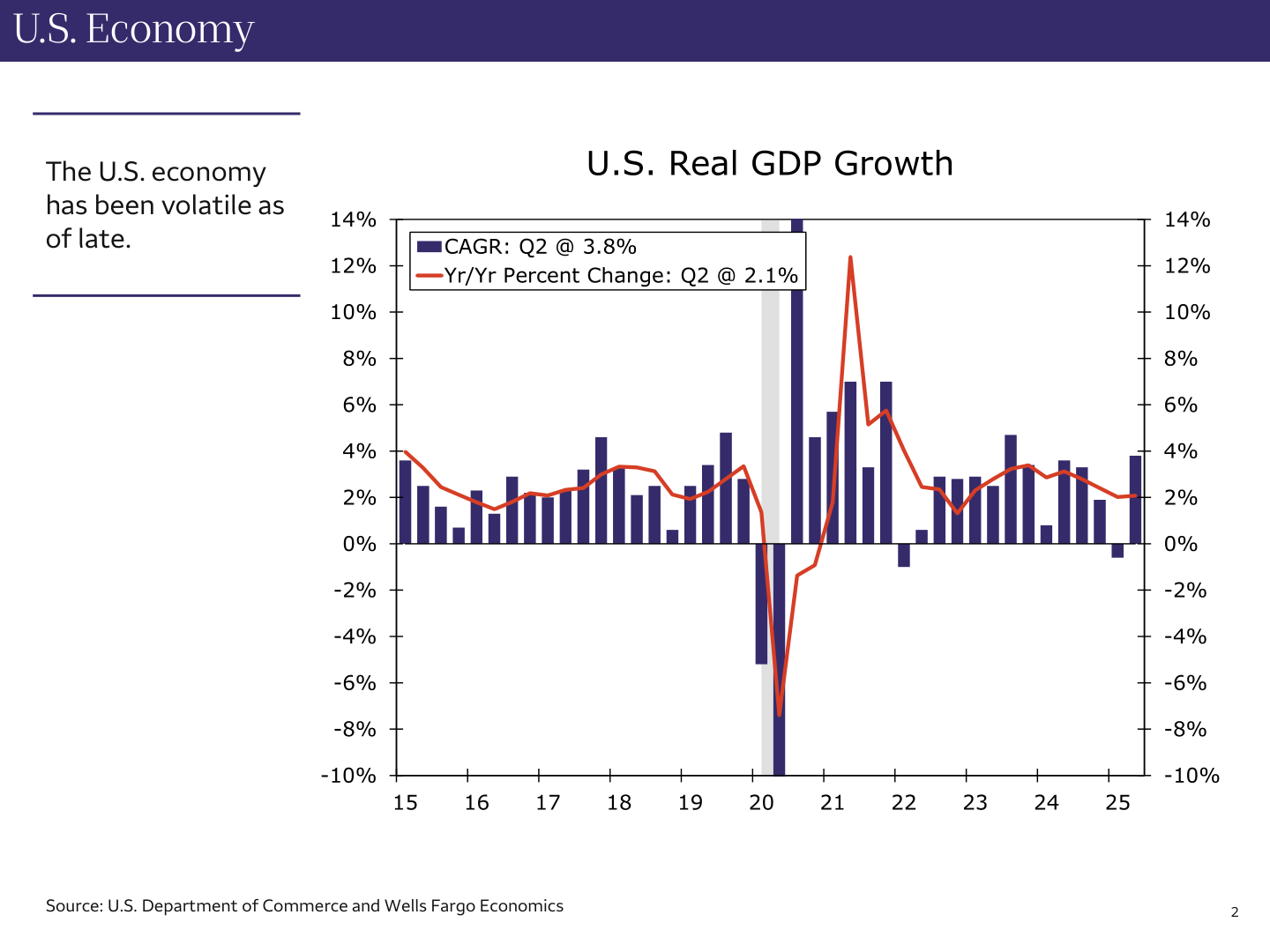
At our Economic Forecast Breakfast, Jackie Benson from Wells Fargo explained the dramatic GDP swings we have experienced this year.
Q1 2025: Economy contracted approximately 1%
Q2 2025: Economy grew nearly 4%
The key insight: Much of this volatility was driven by tariff-related inventory stockpiling, not underlying demand weakness.
"Through all the chaos and uncertainty, the data show us that demand held up in the first half of the year," Benson noted.
Suggested Visual
TRADE POLICY: The Tariff Story - From 3% to 30% and Back to 17%
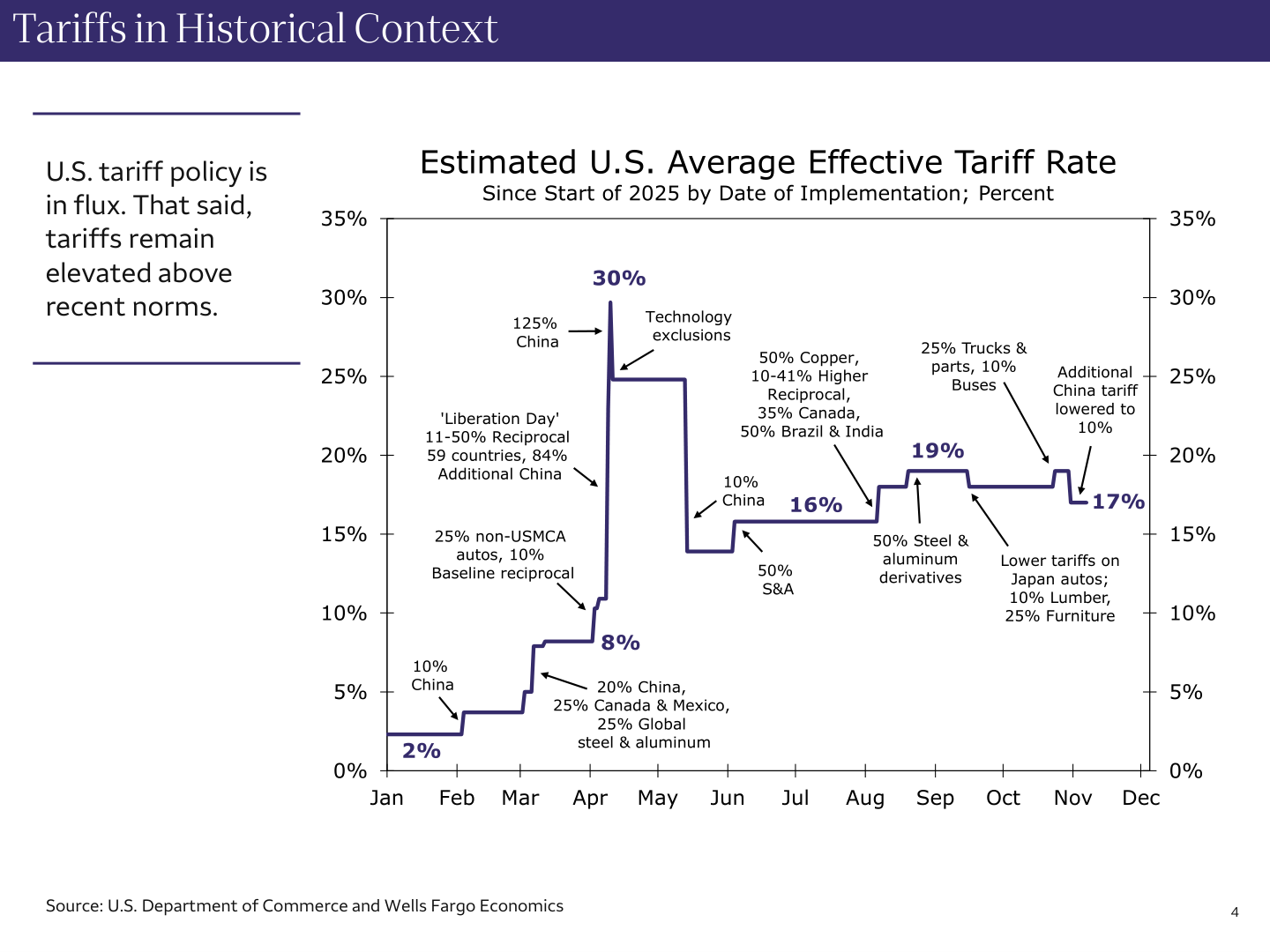
One of the most striking charts from Jackie Benson's presentation tracked 2025's tariff journey:
January 2025: Effective tariff rate below 3%
April "Liberation Day": Spike to 30%
December 2025: Settled around 17%
"These tariffs are so big and bad, why haven't they stoked inflation? Well, they have. You just have to look for the evidence," Benson explained.
Key takeaway: Build tariff costs into 2026 planning, but do not expect an endless inflationary spiral.
Suggested Visual
COMMUNITY SPOTLIGHT: AltaGas Invests in Whatcom County
We thank Chris Prokop from AltaGas for sharing how their organization invested in our community this year.
In 2025, AltaGas donated $250,000 USD to Whatcom County initiatives, including their recent contribution to the Blaine Plated Windows Initiative.
"Passion, leadership, and collaboration" -- that is what makes Whatcom County special, according to Prokop.
This is the kind of corporate citizenship that strengthens our entire business community.
MONETARY POLICY: Federal Reserve Outlook for 2026
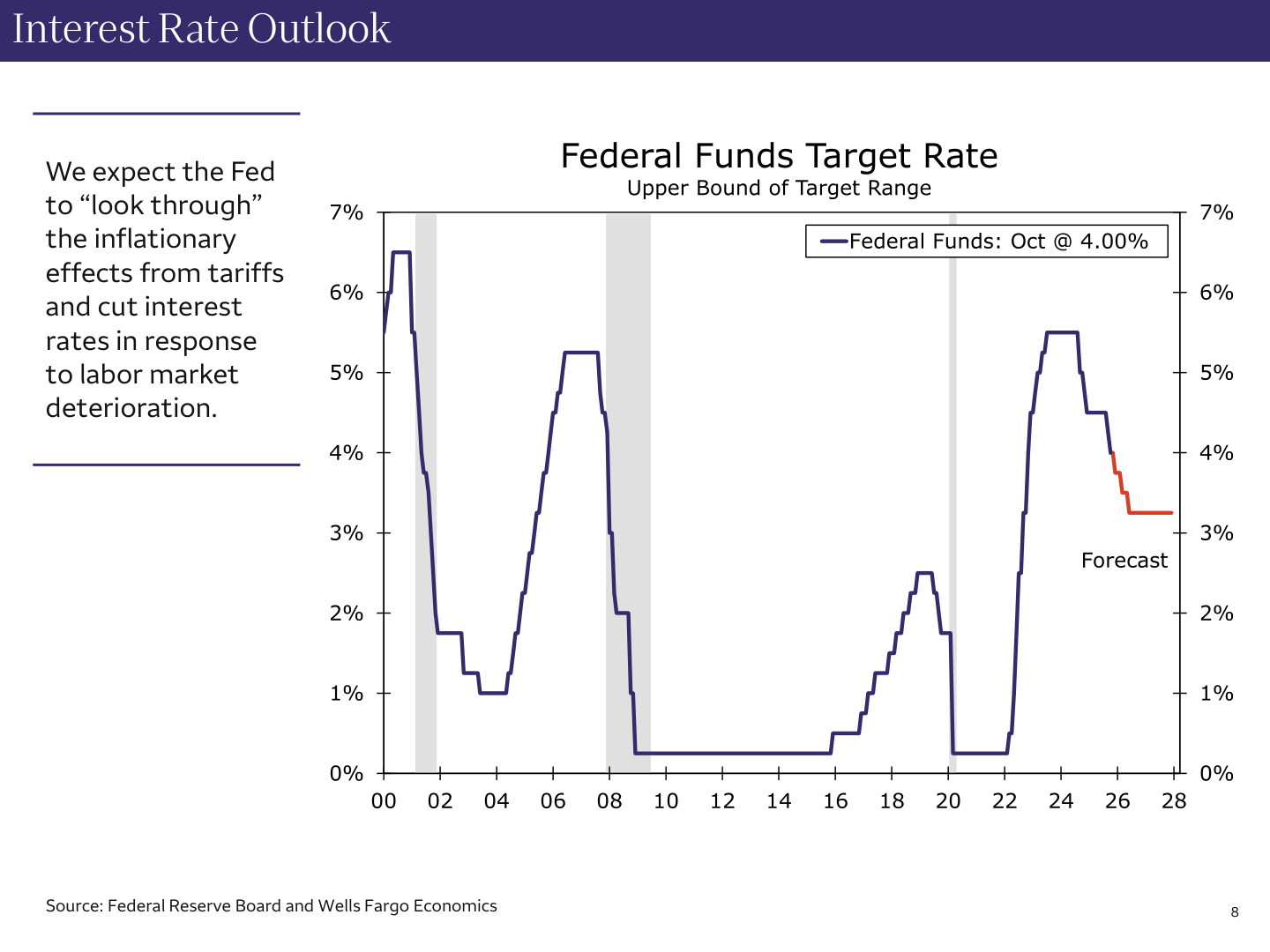
Despite inflation concerns, Jackie Benson's forecast calls for continued Fed rate cuts:
December 2025: Another cut expected
Through June 2026: Two more cuts totaling 75 basis points
Target: Federal funds rate dropping to 3.25%
Why cut rates amid inflation pressure?
"We expect the Fed to 'look through' the inflationary effects from tariffs and cut interest rates in response to labor market deterioration," Benson explained.
Suggested Visual
Local Economic Realities
INSIGHT: The K-Shaped Economy Explained
One of the most discussed topics from our Economic Forecast Breakfast:
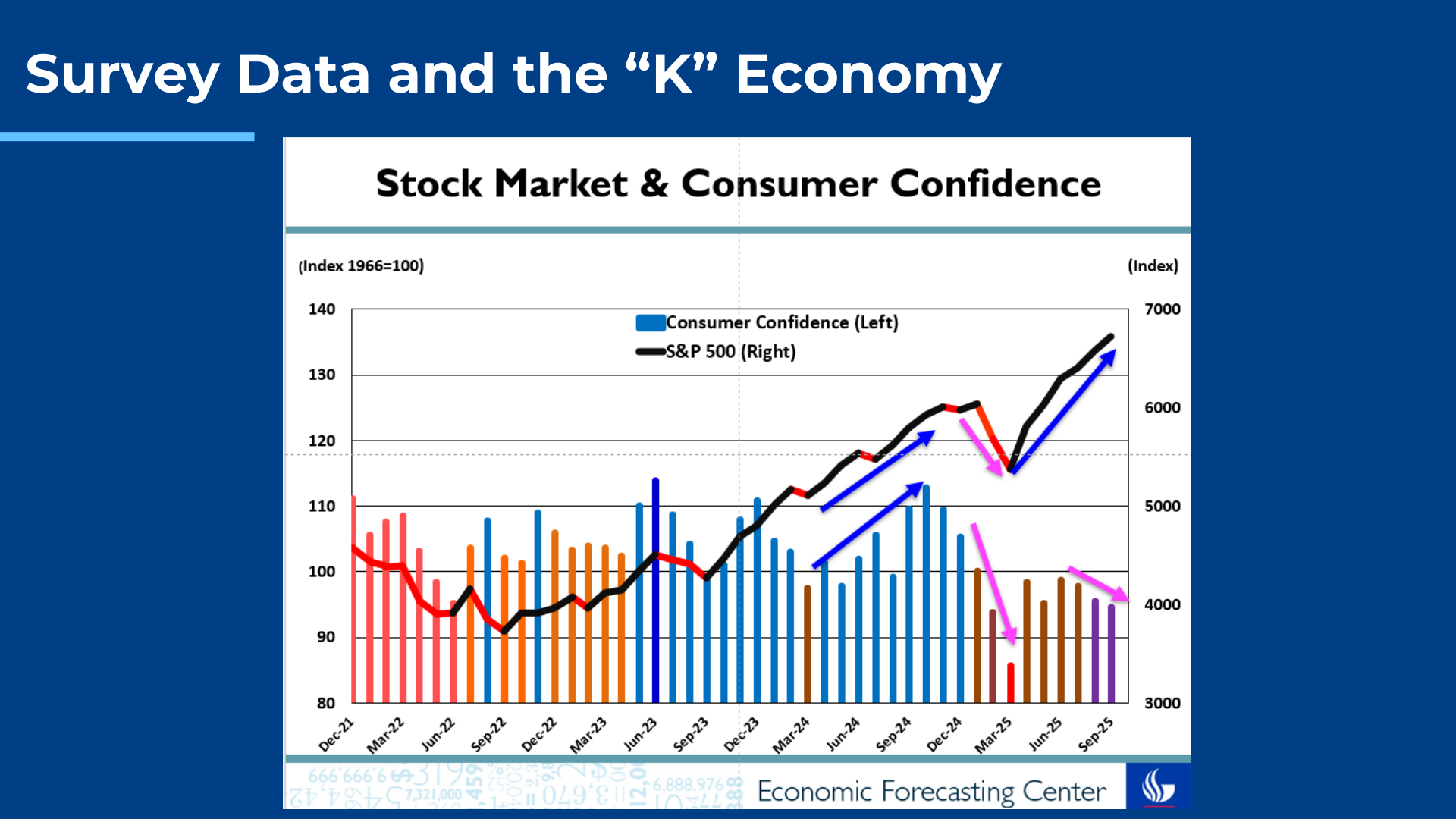
While the S&P 500 soared from 4,000 to 6,800, consumer confidence fell from 115 to 95.
How can both be true? The "K economy":
Upper Track (Top 30% income):
- Stock portfolios up
- Home values rising
- GDP growing
Lower Track (Bottom 50% income):
- Car loan delinquencies increasing
- Debt levels rising
- Using "buy now, pay later" for groceries
For Whatcom County businesses: Understand which customers you serve.
Suggested Visual
LOCAL DATA: Whatcom County Housing Affordability
Hart Hodges shared significant data at our Economic Forecast Breakfast:
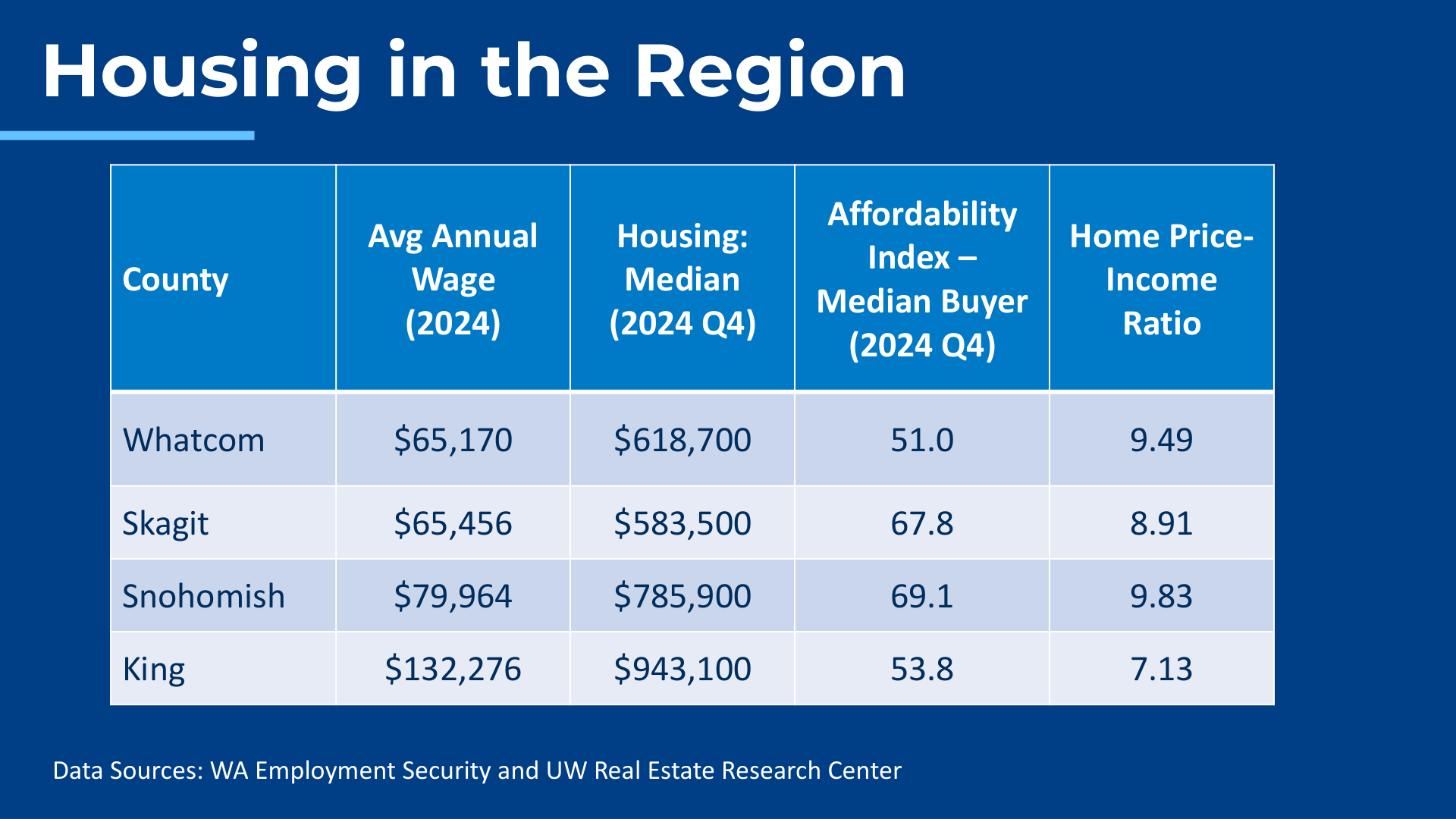
Whatcom County has the most challenging housing affordability in the Puget Sound region when comparing home prices to local incomes.
The numbers:
- Median home price: $618,700
- Average annual wage: $65,170
- Home price-to-income ratio: 9.49x
For comparison:
- Skagit County (similar wages) has homes $35,200 less expensive
- King County (2x higher wages) has better affordability despite $943k median homes
This is not just a housing issue -- it is an economic competitiveness issue.
Suggested Visual
LOCAL DATA: Bellingham Cost of Living Compared to Peer Cities
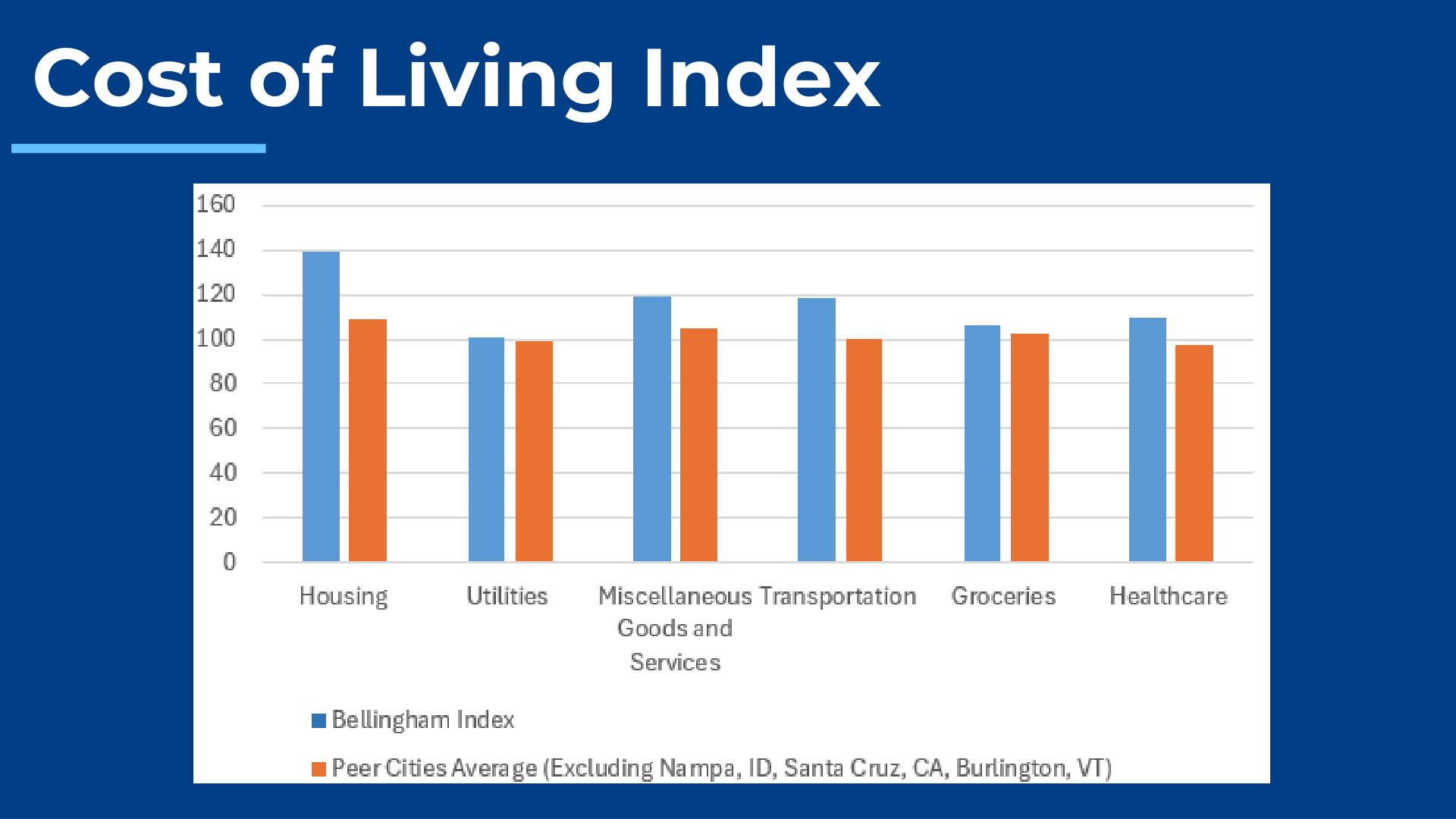
Hart Hodges and James McCafferty compared Bellingham to peer cities nationwide, including Burlington VT, Flagstaff AZ, Santa Cruz CA.
While our wages are average for similar college towns, our costs are above average:
Housing: 27% higher than peers
Transportation: 19% higher than peers
Healthcare: 12.5% higher than peers
Groceries: 5% higher than peers
James McCafferty noted: "In Seattle, higher costs are justified by much higher wages. We just showed you wages are not really higher and costs are higher."
Suggested Visual
LOCAL DATA: Whatcom County Employment by Sector
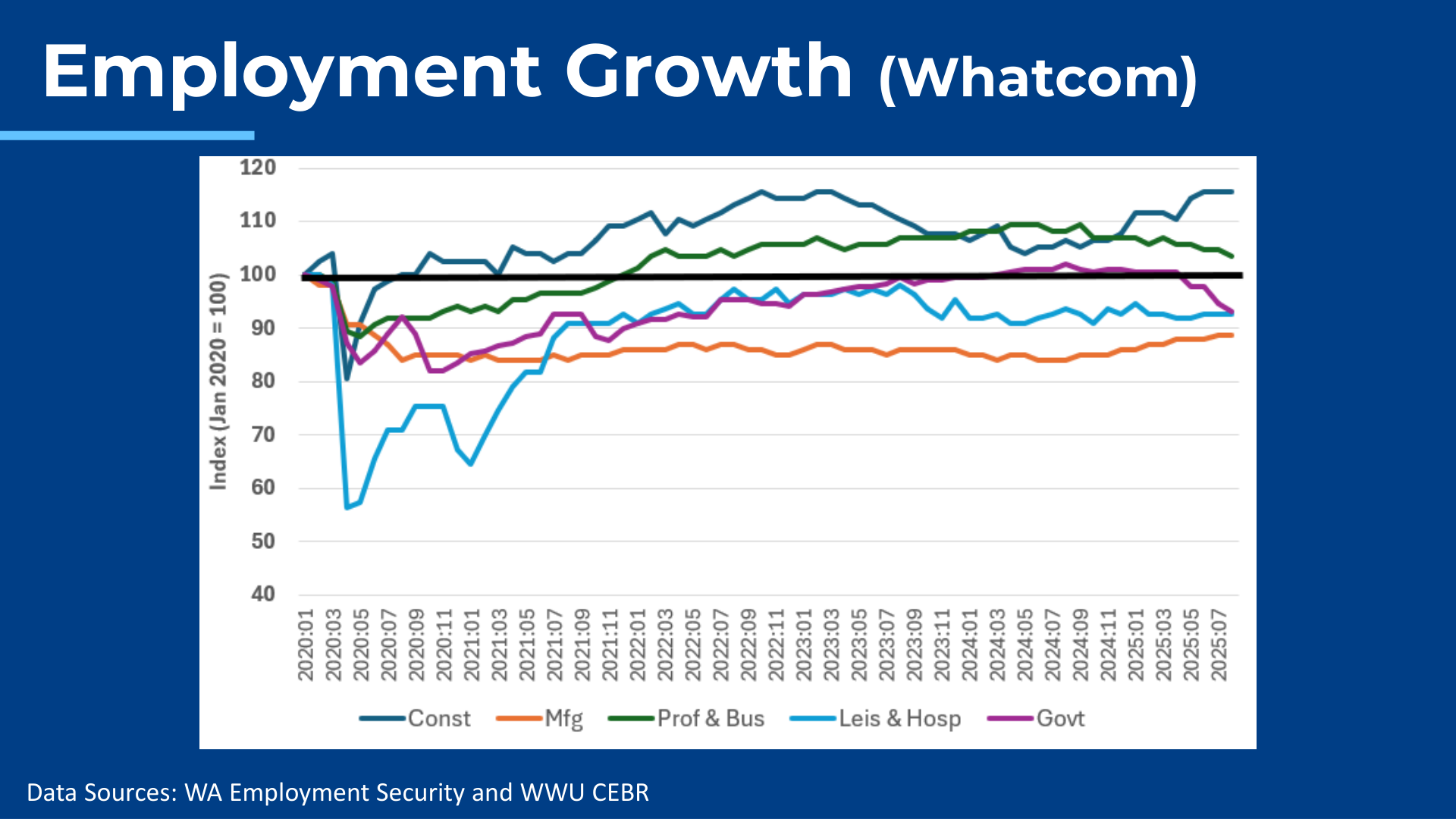
Not all sectors have recovered from COVID. Hart Hodges presented this data:
Sectors Above January 2020 Levels:
- Construction: +17% (strongest performer)
- Professional and Business Services: +3%
Sectors Still Below January 2020:
- Manufacturing: -12% (losing well-paying jobs averaging $78k)
- Leisure and Hospitality: -7%
- Government: -1% (our largest employer)
As Hart noted: "Whatcom County forecasts used to be incredibly boring: 2%. Did not matter, 2%. We are below 2% now."
Suggested Visual
NATIONAL TREND: Technology Investment Reshaping the Economy
Jackie Benson shared significant statistics from her presentation:
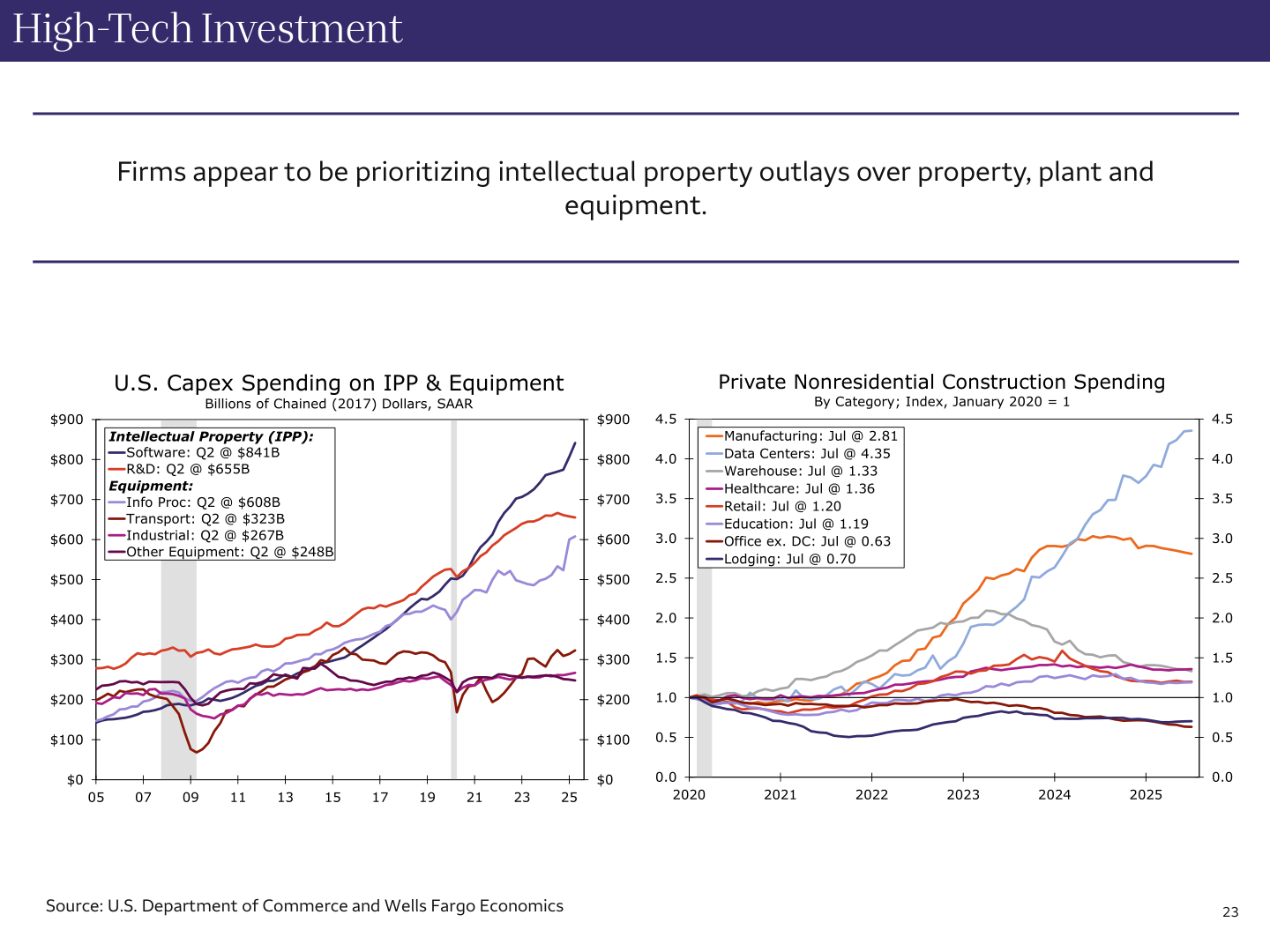
Data center construction has grown 335% since January 2020 -- reaching an index level of 4.35.
Meanwhile, high-tech manufacturing (semiconductors, computers, communications equipment) is growing at 13.8% year-over-year, while non-tech manufacturing grows at just 0.6%.
"Firms appear to be prioritizing intellectual property outlays over property, plant and equipment," Benson explained.
For Whatcom businesses: Consider how technology can drive productivity gains in your operations.
Suggested Visual
Looking Ahead
INSIGHT: The Labor Market Paradox
An economic puzzle from our Forecast Breakfast:
Job growth has slowed:
- Start of 2025: 100,000+ jobs per month
- September 2025: Just 62,000 jobs per month
Yet unemployment remains at 4.4% nationally and 4.6% in Whatcom County.
How can both be true?
Jackie Benson explained: "The U.S. labor force has essentially stopped growing" due to:
- Net decline in foreign-born workers
- Aging population
- Increased retirements
What this means for Whatcom businesses: The tight labor market is not going away.
FORECAST: Your 2026 Economic Roadmap
As we close out 2025, here is what our expert speakers forecast:
National Outlook (Jackie Benson, Wells Fargo):
- GDP Growth: 2.3%
- Unemployment: Peaking at 4.5%
- Inflation: Rising to ~3% early 2026, then moderating
- Fed Funds Rate: Declining to 3.25% by mid-2026
Local Outlook (Hart Hodges and James McCafferty, WWU CEBR):
- Employment Growth: ~1% (below historical 2% trend)
- Housing: Remains critical affordability challenge
- Headwinds: State budget cuts affecting major employers
The Bottom Line: Expect modest, steady growth rather than a boom.
INSIGHT: When Tariff Stockpiles Run Out
One of the most forward-looking insights from Hart Hodges and James McCafferty:
In March 2025, businesses stockpiled a massive $275 billion in imported goods ahead of tariffs. By April, inventories began drawing down.
"Tariffs have been slow to pass through to prices because imported commodities were stockpiled," they explained.
The critical question for 2026: When will those stockpiles run out, forcing businesses to buy at tariffed prices and pass costs to customers?
Strategic planning for 2026 requires thinking through your inventory timeline and pricing strategy.
DISCUSSION: The Reality for Whatcom Small Businesses
At our Economic Forecast Breakfast, WBA Executive Director Barbara Chase asked about the challenges facing Bellingham small businesses.
Hart Hodges' response: "Nationally, small businesses are struggling and closing. When I look at employment rate, struggles of small business are part of this."
The factors at play:
- Higher minimum wages
- Higher rents
- Higher food costs
- Changing consumer behavior
- Canadian spending measurably down in Q1-Q2 2025
This is why WBA exists -- to bring you insights, advocacy, and community support as you navigate these challenges.
MEMBERSHIP: Why WBA Membership Matters
Our Economic Forecast Breakfast was strategic intelligence for your business.
What you receive through WBA:
- Direct access to Wells Fargo's economist analyzing national trends
- WWU's Center for Economic and Business Research dissecting local data
- Peer-benchmarked cost of living analysis
- Employment forecasts specific to Whatcom County sectors
- Housing affordability data for workforce planning
This year, 130,000+ attendees participated in WBA events (up from 87,000).
As we enter 2026, having WBA as your partner means navigating with clarity rather than guessing.
UPCOMING: WBA Events in 2026
Did you miss the Economic Forecast Breakfast? It sold out in November and we had to add seats.
WBA hosts business intelligence events throughout the year. From policy briefings to industry-specific forums to our signature breakfast series, we bring you the insights and connections that drive business success.
Our 2026 calendar includes opportunities to:
- Hear from industry experts
- Network with fellow business leaders
- Stay ahead of economic trends
- Influence policy discussions
- Grow your business strategically
The businesses that thrive are the ones that stay informed and connected.